

September 2026 update. Dr. Farhan. Confirm numbers with your clinic.
People search for “the IVF process” hoping for one timeline. Real cycles split: consult and testing, stimulation, retrieval, lab, then either a fresh transfer or a freeze and a later FET, then a pregnancy test. Insurance authorizations and legal consents (especially with donors or carriers) can take as long as the medicine.
Keep a single fact straight for later dating: when an embryo is transferred, educational due date = transfer + 266 − embryo age (Day 5 = 261 days). Retrieval dating is a different mode. Mixing them is how calendars break.
Consult, labs, and uterine evaluation
Expect infectious disease labs, ovarian reserve testing (AMH, antral follicle count), semen analysis, and often a uterine cavity check (saline sonogram, hysteroscopy, or hysterosalpingogram depending on history). Genetic carrier screening is increasingly offered. Results change medication starting doses and whether ICSI, donor gametes, or PGT is discussed. This phase is slow on purpose.
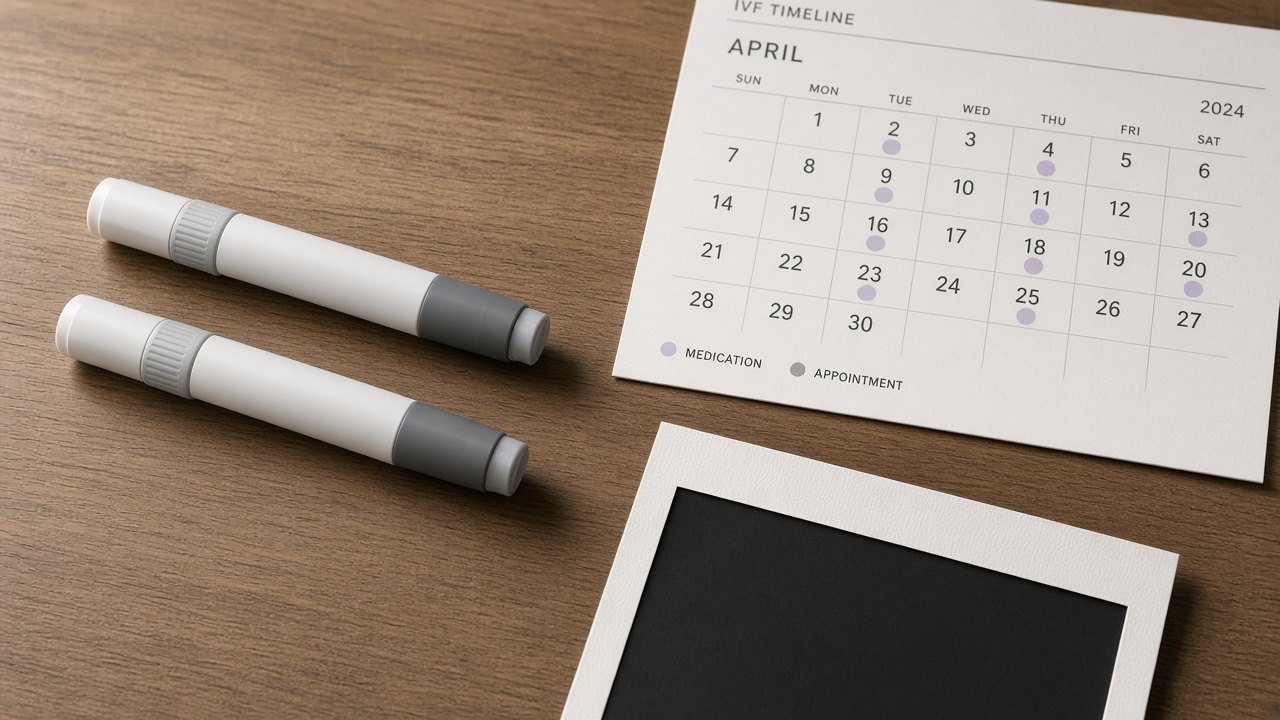
Stimulation through retrieval
Injections, monitoring visits, trigger, retrieval under sedation. OHSS education should happen before trigger, not in the recovery bay. Egg counts are not baby counts. The lab will report mature eggs, fertilization, and growth separately.
Laboratory week
Day 1 fertilization check, then cleavage, then blastocyst culture if that is the program. You may get photos or a portal update. Silence from the lab is not always bad news; some teams only call at set checkpoints. If biopsy for PGT is planned, embryos are usually frozen while results return, that inserts a gap before transfer.
Transfer and testing
Fresh transfer happens a few days after retrieval. FET happens after lining prep. The two-week wait is a name, not a law: beta timing is set by your clinic (often 9-14 days after transfer depending on embryo day). A negative is devastating; a faint home test is ambiguous. Plan support in advance, not at 5 a.m. on test morning.
After a known transfer, sketch dates with the IVF due date calculator or the Android app. Day 5 = 261 days from transfer; Day 7 = 259, not Day 5.
If it works, and if it does not
A positive beta starts obstetric dating from IVF math, plus progesterone/estrogen plans your clinic already wrote. A negative starts a follow-up: why, what to change, whether another retrieval or another FET is next. Repeating the exact same cycle without a review is how people spend money twice on the same obstacle. Ask for a concrete change or a clear reason there is none.
Legal and third-party delays
Donor contracts, carrier contracts, and notaries can stall a medically ready cycle. Start legal work in parallel with the medical workup. If you need a court order or a pre-birth order in your country, that timeline belongs on the same whiteboard as stimulation dates.
Workplace leave letters can be written as “outpatient procedure with sedation” without the letters IVF if you need privacy. Retrieval day still needs a ride home.
Phase map: where months actually go
IVF feels slow between adrenaline spikes. A typical first cycle spans consults and testing, ovarian stimulation with monitoring, egg retrieval, lab fertilization and culture, embryo transfer (fresh or frozen), then the two-week wait for beta hCG. Gaps between phases, especially waiting for PGT results or a FET calendar slot, often feel longer than injections themselves.
| Phase | Typical duration | What you are waiting for |
|---|---|---|
| Consult + work-up | 2-6 weeks | Labs, semen analysis, uterine imaging, consent |
| Stimulation | 8-14 days | Follicle growth on ultrasound + blood estrogen |
| Trigger → retrieval | 36 h after trigger | Egg collection under sedation |
| Lab culture | 3-7 days | Fertilization report, blastocyst formation, optional biopsy |
| Transfer | 1 visit | Catheter placement; stage recorded for dating |
| Two-week wait → beta | 9-14 days | Blood hCG; progesterone support continues |
Decision points patients remember too late
Fresh vs freeze-all. Rising estrogen, OHSS risk, or desire for PGT can push transfer to a later FET cycle. Embryos survive freeze-thaw; due date still uses future transfer stage, not retrieval day.
Day 3 vs Day 5 transfer. Affects lab schedule and due-date offset by two days. See Day 3 vs Day 5 and Day 6/7 if culture extends further.
Single vs double embryo. Many programs default to single embryo transfer for safety; ask how twin risk is discussed.
What happens if this cycle stops early. Canceled retrievals and zero-fertilization cycles happen. Clinics regroup before stimulation starts again, emotional recovery time is part of the timeline too.
After beta: where this guide ends
A positive beta opens pregnancy scheduling. EDD from transfer math, obstetric handoff, trimester planning. That is covered in the IVF due date planner and FET formula page, not here. Transfer-day sensations and the first 72 hours belong in the transfer day guide and TWW timeline.
If you are still deciding whether IVF fits your situation, start with what is IVF for vocabulary and expectations before diving this deep into calendars.
Medications and monitoring: the invisible middle
Stimulation injections happen at home after teaching sessions. Monitoring visits track follicle size and estrogen; doses adjust mid-cycle. Trigger shot timing is hour-specific, clinics give a window, not “sometime tonight.” Missed triggers cancel retrieval; call the on-call line if you are unsure.
Post-retrieval, antibiotic or steroid support may appear depending on protocol. Progesterone before fresh transfer differs from FET prep but feels similarly relentless. Keep a single written medication chart on the fridge; partners should know how to mix and time doses if you are sedated or traveling.
Lab updates arrive on uneven schedules: fertilization call day one, embryo count day three, blastocyst news day five or six. Clinics may not phone if numbers are unchanged, ask whether silence means “still growing” or “awaiting nurse batch.” Embryo grading letters arrive with stage; photograph the summary for dating later.
Negative beta ends the cycle medically but not administratively: billing, storage decisions for remaining embryos, and follow-up consults continue. Positive beta triggers overlap, fertility monitoring until release plus scheduling obstetric intake. Know which portal to watch for each; duplicate appointments happen when teams do not communicate.
Save every embryo report PDF the day it arrives; stage labels on transfer morning should match those files exactly.
Frequently asked questions
Can I travel during stimulation?
Monitoring appointments are frequent and timing-sensitive. Travel is sometimes possible with local monitoring arranged in advance, ask before booking non-refundable trips.
How soon after retrieval is transfer?
Fresh transfers often occur Day 3 or Day 5 after retrieval. Freeze-all cycles may wait weeks until a prepared FET month.
When do I get a due date?
Clinics usually print it on the transfer summary using embryo stage. You can verify with our calculator the same day.
What if beta is negative?
The cycle ends medically with discontinuing support medications; next steps vary, rest, review, possibly another transfer from frozen embryos or a new retrieval.
Sources
Tools: IVF due date calculator · FET calculator · Android app
The Complete IVF Process Step by Step is clinic-specific. Use this as a checklist for questions, not as a diagnosis.
Educational guide only — not medical advice. If your clinic chart disagrees with a date here, use the clinic chart. For pain, heavy bleeding, or fever, call your clinic’s after-hours line.