
Updated October 15, 2026 by Dr. Farhan. Educational guide, not a consult.
The night before egg retrieval, most people are not lying awake thinking about follicles. They are thinking about the needle, the sedation, and whether they will wake up to good news or a shrug. Here is the honest version: retrieval is the shortest, most choreographed part of IVF, and almost everything that worries people about it is more manageable than the two-week wait that follows.
Egg retrieval (oocyte retrieval) is a timed procedure: trigger shot, then usually about 36 hours later, sedation, transvaginal ultrasound-guided needle aspiration of follicles. It is not abdominal surgery. It is still a medical procedure with bleeding, infection, and anesthesia risks that should be on your consent form in plain language. The NHS describes egg collection as a hospital procedure done under sedation, with the eggs collected through a needle guided by ultrasound (NHS).
The number of eggs in the lab report is not the number of babies. Immature eggs, failed fertilization, and arrested embryos are expected leakage in the pipeline.
Retrieval day, hour by hour
| When | What happens |
|---|---|
| 36 hours before | Trigger injection at the exact prescribed time. This timing is what makes the whole day work; set redundant alarms. |
| Morning of | Fasting from solids as instructed, no makeup or nail polish if anesthesia asks, comfortable clothes, ride arranged. You will not drive afterward. |
| Check-in | Consent forms, IV line placed, vitals checked. Tell the team about loose teeth, reflux, or anything that affects sedation. |
| The procedure (15 to 30 minutes) | Sedation, then the physician drains follicles through a thin needle while an embryologist checks the fluid for eggs. You will not remember the middle. |
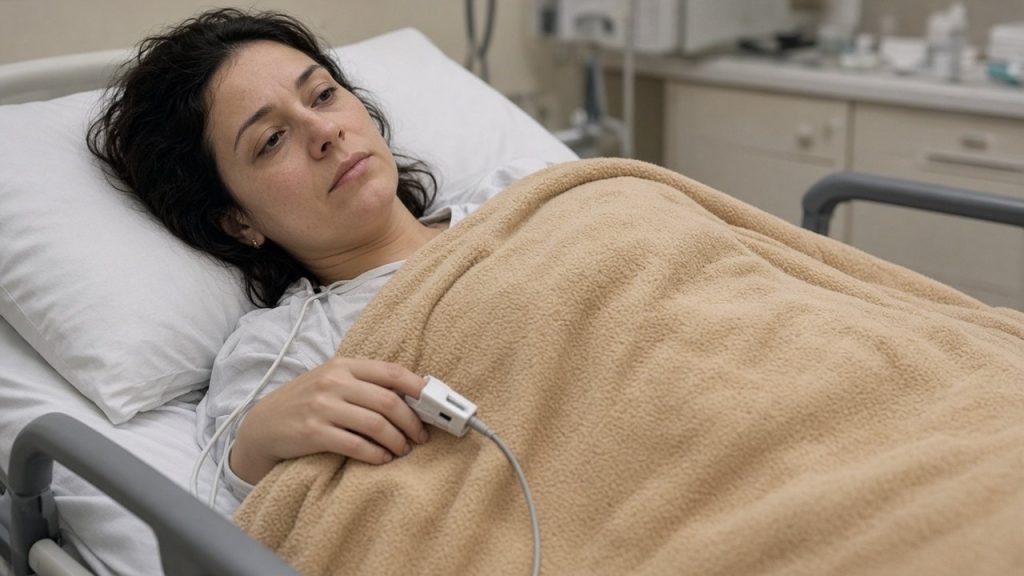
| Recovery room (1 to 2 hours) | Wake up groggy, cramping like a strong period. The nurse watches bleeding and pain, then discharges you with aftercare instructions. |
| That evening | Rest, light food, heating pad. Spotting is common. Some clinics give a same-day egg count; others call the next morning. |
| Next morning | Fertilization check: the lab reports how many mature eggs fertilized normally. This is the call that actually matters. |
| Days 3 to 6 | Updates as embryos develop. Expect attrition; not every fertilized egg becomes a blastocyst, and that is normal biology, not a mistake. |
How to prepare
Follow fasting rules. Arrange a ride; you will not drive. Remove nail polish if anesthesia asks. Tell the team about loose teeth, reflux, or marijuana or opioid use that can affect sedation. Wear a pad after; spotting is common. Leave valuables at home. If you have OHSS risk, weigh yourself the morning of and know the clinic’s danger symptoms.

In the room
You will be positioned, sedated, and the physician will drain follicles while an embryologist looks for eggs in the fluid. Partners usually wait outside and get a phone call when you are in recovery. Ask in advance whether photos or egg counts are given the same day or the next morning, so you are not refreshing your phone in the recovery chair.
Recovery
Cramps like a strong period, bloating, and grogginess are common for 24 to 48 hours. Sharp severe pain, heavy bleeding, fainting, fever, or shortness of breath are not “normal retrievals.” Constipation from anesthesia and progesterone needs a plan (use your clinic’s list). Sexual intercourse is usually paused for a stretch your clinic will specify. Returning to work the next day is common for desk jobs and optimistic for physical jobs.
Pain that peaks on day three with vomiting and abdominal distension is OHSS until proven otherwise. Go in. Do not wait for the fertilization call to be over. Our full guide on OHSS after egg retrieval lists the warning signs in detail.
In the lab that afternoon
Eggs are stripped of cumulus cells if ICSI is planned, then injected or inseminated. Fertilization is checked the next day. You can do everything “right” and still get a call that fewer eggs were mature than follicles measured. Follicle count is an ultrasound estimate, not a guarantee. Once embryos grow, our embryo grading guide explains what the numbers and letters on your report mean.
If a transfer happens, date the pregnancy from embryo age plus transfer (or retrieval if that is the event you choose) on the IVF due date calculator. Day 5 = 261 days from transfer.
Empty follicle and low-maturity calls
If many follicles yield few eggs, clinics talk about empty follicle syndrome, timing, or trigger absorption. That is a protocol puzzle for next time, not proof you “blocked” the needle with anxiety. Ask whether they will change trigger type or add a dual trigger.
Questions patients actually ask about egg retrieval
Will it hurt?
You are sedated for the procedure itself, so you will not feel the needle. Afterward, expect period-like cramping for a day or two. Severe or worsening pain is not routine; call the clinic.
How many eggs will I get?
No one can promise a number. Follicles seen on ultrasound are an estimate, and some yield no egg or an immature one. What matters more than the raw count is how many are mature and fertilize normally.
Can my partner be in the room?
Usually not during the procedure itself, but policies differ. Ask your clinic in advance so there are no surprises at check-in.
When do I find out if the eggs fertilized?
Most clinics call the morning after retrieval with the fertilization report. Some also give a same-day egg count before you leave.
What if I get OHSS?
Mild bloating is common; significant abdominal swelling, rapid weight gain, vomiting, or shortness of breath are not. Clinics screen high-risk patients and may freeze all embryos to let the ovaries settle. Read the warning signs in our OHSS guide.
What to ask your clinic before retrieval day
- What exact time is my trigger, and who do I call if I am running late?
- What type of sedation do you use, and do I need to stop any medications beforehand?
- Will I get an egg count the same day, or the next morning with fertilization results?
- What pain relief do you recommend for the first 48 hours?
- What symptoms should send me to the emergency line versus waiting for morning?
- If we are freezing all embryos, when does the transfer cycle start?
Sources
- NHS, “What happens during IVF”: nhs.uk (egg collection procedure and aftercare)
- Human Fertilisation and Embryology Authority: hfea.gov.uk (IVF stages and risks)
- American Society for Reproductive Medicine, patient resources: reproductivefacts.org (patient fact sheets on IVF procedures)
Read this as background, not orders. If something feels wrong after your retrieval, your clinic’s after-hours sheet wins, so keep that number in your phone.
Educational guide only — not medical advice. If your clinic chart disagrees with a date here, use the clinic chart. For pain, heavy bleeding, or fever, call your clinic’s after-hours line.