
Updated October 2026. By Dr. Farhan. About embryo grading and quality.
Nobody hands you a report with “4AA” on it and explains what it feels like to read it. One minute you are waiting for a phone call, the next you are googling letter combinations like they are lottery numbers. This page is the calm version of that search.
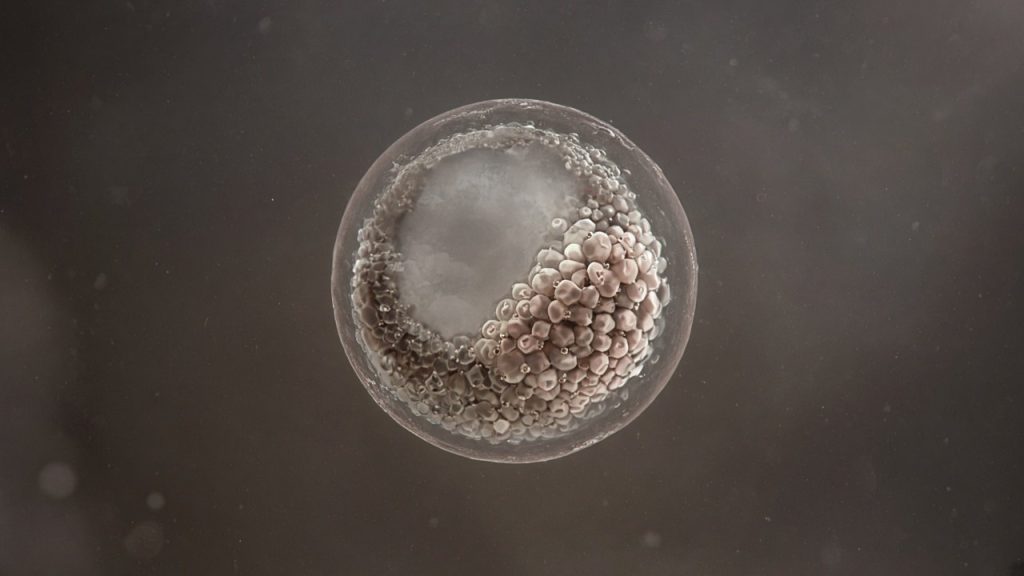
Embryo grades are the lab’s way of describing what an embryo looked like at one moment in a dish: cell number and fragmentation on Day 3, or expansion, inner cell mass, and trophectoderm on a blastocyst. They help your team choose which embryo to transfer first. They are not a verdict on your fertility, and they are not a forecast of the child. The HFEA describes grading as the embryologist checking embryos under a microscope and scoring them by the number and appearance of cells, which is exactly the snapshot idea.
Day 3 grades
Clinics look for an expected cell count and low fragmentation. A “beautiful” 8-cell embryo can still arrest before blastocyst. If you transfer on Day 3, your educational due date uses 263 days from transfer, not the grade. See how the two timelines compare in our Day 3 vs Day 5 transfer guide.

Blastocyst grades
Expansion (often 1-6), inner cell mass (A to C), trophectoderm (A to C) appear in many labs. A 4AA is not a warranty. A 3BB is not a reason to cancel hope. Day 6 and Day 7 blastocysts can be graded the same letters as Day 5; they are still older, so dating uses 260 or 259 days from transfer, not 261.
The Gardner expansion scale, in plain language
The number in your grade comes from the Gardner scale, which describes how far the blastocyst cavity has developed. Here is what each stage means when you read it on a report.
| Expansion stage | What the lab sees |
|---|---|
| 1 | Early blastocyst: the cavity is forming and fills less than half the embryo |
| 2 | Blastocyst: the cavity now fills more than half the embryo |
| 3 | Full blastocyst: the cavity fills the whole embryo |
| 4 | Expanded blastocyst: the cavity is larger than the embryo and the zona (shell) is thinning |
| 5 | Hatching blastocyst: the embryo is breaking through the zona |
| 6 | Hatched blastocyst: the embryo has fully emerged from the zona |
The letters come next: the first letter grades the inner cell mass (the cells that become the fetus), the second grades the trophectoderm (the cells that become the placenta). A is the best-looking, C the least. So 4AA means an expanded blastocyst with top marks on both. Labs vary in exactly how they assign letters, so always read your own clinic’s key rather than comparing grades across clinics.
Photos and portal anxiety
A still photo compresses a moving embryo. Expansion changes over hours. Do not rank yourself against an album from another country that uses another grading scale. Ask your embryologist how their lab reports “fair versus good” in words you can use at the next consult.
If a transfer happens, date the pregnancy from embryo age plus transfer on the IVF due date calculator. Day 5 = 261 days; Day 7 = 259.
Choosing among several frozen embryos
Clinics usually thaw the highest-grade euploid embryo first if PGT was done, or the highest morphology if not. You can ask about untested lower-grade embryos you still want to use. That is a values conversation. It does not require you to pretend grades are meaningless, only to remember they are incomplete. Our frozen embryo transfer guide explains how thaw priority and timing work in practice, and the transfer day walkthrough covers what actually happens in the room.
Who decides the transfer order
You can ask to skip a high-grade mosaic or to use an untested embryo first; the clinic can refuse if it violates their policy. Write your preference after a calm consult, not at 7 a.m. on thaw day.
If two embryos are similar, some labs use time-lapse annotations. Those scores are extra data, still not destiny. Due dates ignore all of this and only use embryo age plus the day of transfer.
Confirm every next step with the team that ordered your labs. This article is teaching material only.
What the letters and numbers describe
Embryo grading and quality reports are snapshots of how an embryo looked under the microscope at a fixed time, usually Day 5, Day 6, or Day 7 of development. Blastocyst grades combine three pieces: expansion stage (1-6 or similar scale), inner cell mass (ICM) quality (often A/B/C), and trophectoderm (TE) quality (A/B/C). A “4AA” and a “5AB” are not interchangeable across labs because naming conventions vary.
ICM becomes the fetus; TE becomes placenta. Embryologists weight both when ranking embryos for transfer or freeze. A strong TE with weaker ICM (or the reverse) prompts different embryologist opinions; grading is partly subjective craft, not pure automation.
Grading versus genetics and pregnancy odds
Beautiful morphology correlates with higher live birth per transfer in population data, yet individual average-grade embryos produce healthy babies daily. Morphology does not detect every chromosome error; that is where PGT-A enters if you opted in. A euploid 4BC can outperform an untested 4AA in some cases; clinics may still transfer untested embryos when age and family-building goals favor trying morphology-first.
| Report element | Meaning in plain language |
|---|---|
| Expansion stage | How far the blastocyst cavity developed and whether it is hatching (see the Gardner table above) |
| ICM grade | Compactness and cell number of the future fetal tissue |
| TE grade | Cell count and symmetry of the future placental layer |
| Day of freeze (D5/D6/D7) | Development speed; slower is not always worse |
Discuss transfer priority with your embryologist: age, prior failures, remaining embryo count, and whether Day 3 versus Day 5 transfer paths apply to your bank.
Freezing, thaw survival, and patient questions
High-grade blastocysts survive vitrification and warming well on average, but thaw loss happens; have realistic expectations about how many warmed embryos reach transfer. Labs may regrade after thaw; slight grade drops are common and not automatic cancellation reasons.
Ask for the embryology consult before FET: Which embryo is first in line and why? Any mosaic PGT-A results paired with this morphology? How many frozen straws remain? Grades do not change obstetric dating after transfer; use our FET guide once pregnant.
Day 6 and Day 7 blastocysts are increasingly frozen and transferred successfully; development speed alone is not a discard rule. Labs may photograph embryos for your chart; ask whether images are available at the FET planning visit. When only one lower-grade embryo remains, decision stress peaks; genetics, age, and prior failure history weigh as heavily as the letter grade on the report. Gardner and Istanbul-style grading systems use different letter orders, so always read the legend on your lab report rather than comparing grades from two clinics verbatim. Assisted hatching in the lab is separate from morphology grade; ask if your embryos had zona thinning before freeze. Embryos that collapse before freeze may still survive warming; re-expansion after thaw is part of the embryologist’s warm checklist, not a patient-visible grade on day zero. Culturing to Day 7 before discard is increasingly common; ask your lab’s extended-culture policy before assuming Day-5-only banking.
What grading does not measure
Embryo grades describe morphology at one snapshot; they do not directly score mitochondrial health, implantation potential in your specific uterus, or whether PGT would have changed the label. Two embryos with identical grades from the same cohort can produce different outcomes. Labs also use different grading scales; comparing a “4AA” from one clinic to another’s “AB” without a key is misleading. Treat grade as one input in a transfer decision meeting, not as a pass or fail on your fertility journey. Your embryologist can explain how your clinic weights grade against age, freeze survival, and PGT results.
Frequently asked questions
Is 4AA always better than 4BC?
Generally AA ranks higher in the same lab, but BC embryos can still produce live births. PGT-A status and patient age modify the conversation.
Do grades predict baby health?
Grades predict implantation potential imperfectly, not long-term child health. Anatomy scans and standard prenatal care assess fetal development.
Why did my embryo stop developing in the lab?
Arrest reflects egg or sperm quality, lab conditions, or random biology. It is not caused by something you ate during stimulation.
Should I transfer the best grade first?
Most clinics transfer the highest-priority embryo first, euploid plus grade when PGT-A was done. Embryo banking strategies differ when building sibling inventory.
When the letters stop making sense, stop googling them and ask the embryologist who wrote them down, because that person watched your embryos grow and a search result did not.
Sources
Educational guide only — not medical advice. If your clinic chart disagrees with a date here, use the clinic chart. For pain, heavy bleeding, or fever, call your clinic’s after-hours line.