
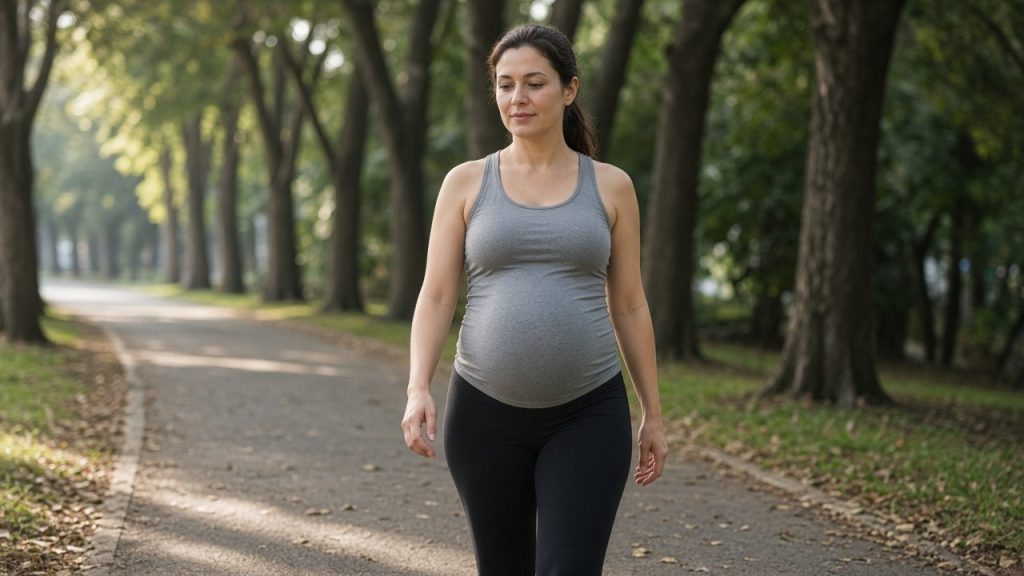
Here’s the question every IVF patient asks and every clinic answers slightly differently: can I still work out? The honest answer is boring on purpose. The goal during IVF isn’t fitness gains. It’s keeping your circulation, mood, and sleep intact without bouncing ovaries that are swollen from stimulation, and without ignoring whatever your retrieval or transfer instructions say.
This is not the month to PR your deadlift or start training for a marathon. It’s also not a medically required couch sentence from day one. The truth lives in the middle, and it shifts by phase.
Exercise by IVF phase
| Phase | Usually fine | Usually paused |
|---|---|---|
| Baseline / early stimulation | Your normal routine | Nothing yet, unless your clinic says otherwise |
| Late stimulation (many follicles) | Walking, gentle yoga, easy cycling | Running, HIIT, heavy squats, anything jarring |
| Retrieval day ± a few days | Short gentle walks | Twisting sports, swimming (if bleeding), anything strenuous |
| Transfer + two-week wait | Walking, normal daily activity | Hot yoga, contact sports, marathon training |
| Once pregnant | Moderate exercise you already did | Hot yoga, lying flat for long sets (later), contact sports |
The big one people miss: once your ovaries are enlarged from stimulation, high-impact movement raises the risk of ovarian torsion. It’s rare. It’s also serious. Your ultrasound — not a blog, not this one — shows whether you’re in the “still fine” zone or the “please don’t bounce” zone.
After retrieval: what changes
Expect a few days of cramping. If you’re at risk for OHSS (ovarian hyperstimulation syndrome), the rules tighten further — and shortness of breath with activity is a call to your clinic, not a fitness test. Pelvic pain after retrieval isn’t a cue to “walk it off” if you’re dizzy. Call the nurse.
The transfer-week myth
Clinics differ on transfer day instructions. Some say resume walking the same day. Some ask for 24 to 48 hours of taking it easy. Here’s what the evidence actually supports: normal daily activity is fine. Bed rest doesn’t improve implantation, and no grocery run ever prevented one. Follow your clinic’s written sheet so you’re not inventing guilt either way.
Questions to ask your clinic
- At what point in stimulation should I scale back exercise?
- What’s your guidance for the days between retrieval and transfer?
- Do I have any OHSS risk factors that change the exercise rules?
- When can I return to my full routine after a negative or positive result?
Weight, BMI cutoffs, and the awkward conversation
Some programs delay treatment above a BMI threshold because of anesthesia and pregnancy risk. That can feel cruel and still be their policy. Crash dieting before retrieval is a bad workaround — and if you’re an athlete with very low BMI, under-fueling is its own fertility problem. Honesty on the intake form beats a surprise in the OR.
Wearables will fight your IVF dates
Your fitness watch doesn’t know you did IVF. It’ll keep flagging “peak fertility” windows and fighting your real dates. Use it for sleep tracking if that helps; ignore everything else. And if you’re tracking your pregnancy, keep transfer day and embryo age in our IVF due date calculator (Day 5 = 261 days from transfer) so you’re not arguing with an LMP-based widget. Related: OHSS after egg retrieval — when rest becomes medical necessity.
Sources
- ACOG: Exercise During Pregnancy (FAQ)
- NHS: Exercise in pregnancy
- ASRM: Ovarian Hyperstimulation Syndrome (OHSS)
Your clinic’s after-hours sheet wins over any article if something feels wrong. When in doubt, call them.
Educational guide only — not medical advice. If your clinic chart disagrees with a date here, use the clinic chart. For pain, heavy bleeding, or fever, call your clinic’s after-hours line.