

Edited September 2026 by Dr. Farhan. Educational guide, not a consult.
After a positive beta, someone in your circle will ask about the gender-reveal blood test. Clinically, that same technology , NIPT after IVF, is a screening tool for common chromosome conditions, not a guarantee of a healthy baby. If you already did PGT-A on embryos, you might wonder why NIPT shows up again. The short answer: they measure different things at different times.
PGT-A vs NIPT, do not mix the acronyms
PGT-A biopsies the embryo before transfer. NIPT reads fragments of placental DNA floating in your blood after you are pregnant. A euploid embryo can still produce a NIPT result that needs follow-up because placenta and fetus do not always match perfectly, especially rare with IVF, common enough that clinics still offer NIPT.
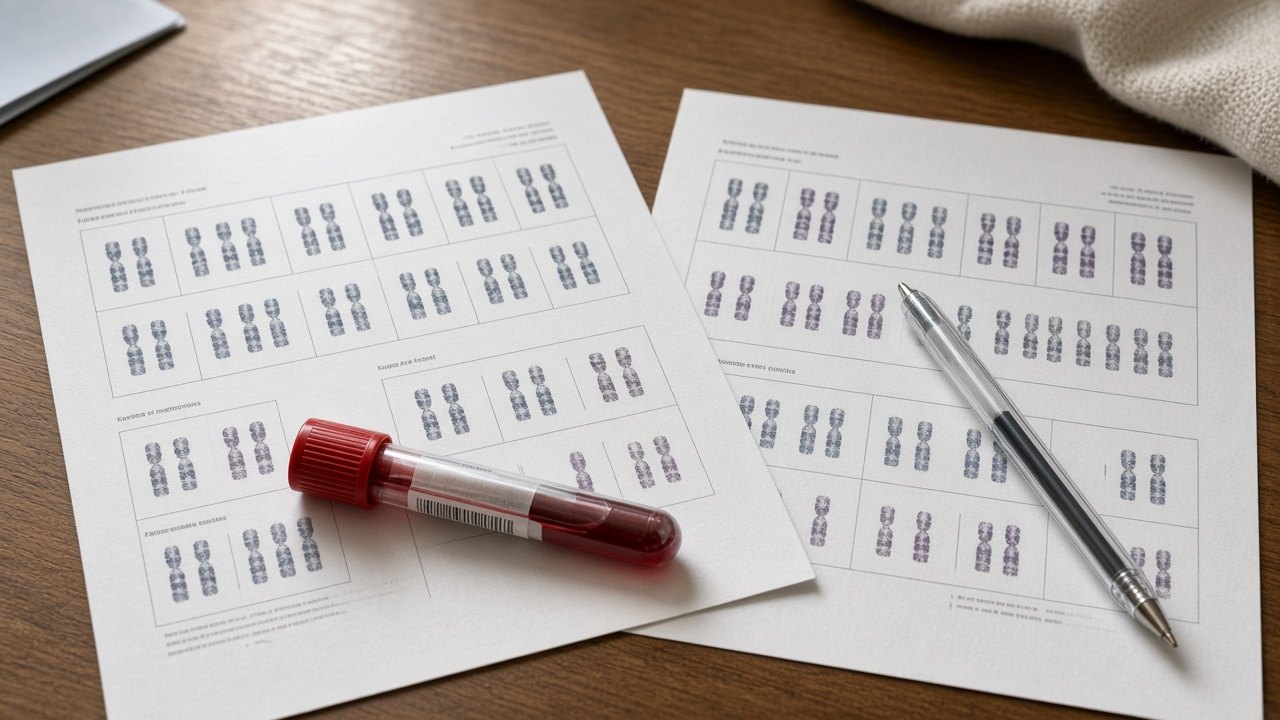
When clinics order NIPT
Most labs want you roughly 10-12 weeks along by obstetric dating (which, after IVF, should come from transfer math, not a guessed last period). Some offer it later; earlier draws can fail for low fetal fraction and require a redraw.
Reasons patients choose it after IVF:
- Reassurance even after PGT-A (personal choice, not always medical necessity)
- No embryo testing was done. NIPT becomes the first broad screen
- Twins or vanishing twin situations where blood results get confusing
What NIPT can and cannot say
Commercial panels most often screen for trisomy 21, 18, and 13, plus sex chromosome anomalies and optional microdeletions depending on brand. It is a screen, high-risk NIPT is not a diagnosis. Amniocentesis or CVS still confirms if you pursue invasive testing.
NIPT does not replace the anatomy scan at 18-22 weeks. Heart defects and many structural issues will never appear in a blood tube.
Special IVF wrinkles
Donor egg pregnancies: NIPT still runs on your blood; discuss whether results reflect donor age genetics appropriately.
Surrogacy: The gestational carrier provides the sample; intended parents should be looped into counseling about who consents to results.
Vanishing twin: Residual DNA can skew results for weeks, your MFM may delay testing.
If NIPT comes back high-risk
Breathe before Google. Call the genetic counselor your clinic trusts. Many high-risk screens are false positives, especially for microdeletions. Next steps might be detailed ultrasound, cfDNA repeat, or invasive testing, a shared decision, not an emergency unless other red flags appear.
Using your IVF due date for scheduling
NIPT timing uses gestational age. After transfer, that age comes from embryo stage, not an app default. Plug transfer date into our IVF due date calculator or weeks-pregnant guide so you do not draw blood a week too early and pay twice.
Patient checklist
- Confirm obstetric dating on paper before scheduling blood
- Ask whether PGT-A changes their recommendation for NIPT
- Know your plan if results are inconclusive (fetal fraction too low)
- Budget for possible amnio/CVS counseling even if you hope to decline invasive tests
Tools: IVF due date calculator · Android app
Educational notes on nipt after ivf pregnancy. Medication, testing, and timing stay with the clinicians who know your protocol.
Why NIPT still appears after euploid embryo transfer
Patients who paid for PGT-A on embryos reasonably ask why NIPT after IVF pregnancy enters the conversation again. PGT-A biopsies trophectoderm cells before transfer to estimate chromosome number in the embryo. NIPT analyzes cell-free placental DNA in maternal blood weeks after implantation. Most of the time results align; they are not redundant measurements of the same tissue at the same time.
Placental mosaicism, a mismatch between placenta and fetus, is uncommon but real enough that obstetric guidelines still treat NIPT as screening, not diagnosis, even after IVF. NIPT also screens conditions PGT-A panels may not have included, depending on lab menu and embryo test type.
Timing, accuracy limits, and IVF-specific wrinkles
Most commercial labs prefer draws around 10-12 weeks gestation by obstetric dating. After IVF, gestational age should come from transfer math, not a guessed last menstrual period or a default app setting. Drawing too early can fail for low fetal fraction and require a paid redraw.
| Topic | What to know after IVF |
|---|---|
| Donor egg pregnancy | NIPT runs on carrier’s blood; counseling covers donor-age genetics |
| Twins / vanishing twin | Residual DNA can confuse results. MFM may delay testing |
| Surrogacy | Gestational carrier provides sample; consent paths must be clear |
| High-risk NIPT | Not a diagnosis, ultrasound, cfDNA repeat, or CVS/amnio may follow |
NIPT screens common trisomies and optional sex-chromosome or microdeletion panels depending on brand. It does not replace the 18-22 week anatomy scan for heart defects or structural anomalies. See our first trimester after IVF guide for how screening fits alongside early ultrasounds.
Scheduling with transfer-based dating
Off-by-one-week errors happen when patients enter a fake LMP into consumer pregnancy apps. Use transfer date and embryo stage. Day 5 transfer adds 261 days to estimated due date in standard ART math, then count weeks for NIPT scheduling. Our IVF due date calculator and weeks-pregnant guide align with clinic obstetric dating when transfer details are entered correctly.
If NIPT returns high-risk, pause before panic searching. Many elevated screens are false positives, especially on microdeletion panels. Genetic counselors explain positive predictive value based on your age and the specific condition flagged. Invasive testing is offered, not mandated, unless other urgent findings appear.
Document whether your OB uses NIPT as a primary screen or as add-on to first-trimester ultrasound and maternal age risk models. Some patients receive “no result” outcomes requiring redraw, budget time and copays. After donor egg or donor embryo pregnancies, counseling clarifies what NIPT can and cannot reassure about donor genetics versus placenta findings. Keep transfer paperwork accessible: accurate gestational age prevents ordering NIPT a week too early and paying twice. State laws on abortion and genetic information vary, counselors explain what results may be disclosed and when. Low-risk NIPT does not eliminate anatomy scan follow-up, structural findings still need second-trimester ultrasound regardless of blood results. Bring your IVF transfer summary to the OB intake visit so gestational age on the lab requisition matches embryo stage.
Frequently asked questions
Is NIPT mandatory after PGT-A?
No. Many euploid-transfer patients skip NIPT after shared decision-making. Others want reassurance or did not test embryos. Clinic culture and insurance coverage vary.
Can NIPT tell me the sex after PGT-A already did?
Often yes, if the lab reports sex chromosomes. Confirm whether your order includes sex disclosure and whether that matches your family preferences.
What if fetal fraction is too low?
The lab may request a redraw one to two weeks later, or recommend alternative screening. BMI, early gestational age, and lab thresholds influence this.
Does NIPT replace first-trimester NT scan?
In many practices NIPT complements NT ultrasound; some programs use one or both depending on risk models. Follow your OB’s bundled screening plan.
Sources
- ACOG practice advisory: cfDNA screening
- National Institutes of Health, prenatal screening research summaries
- CDC: Birth defects diagnosis
Educational guide only — not medical advice. If your clinic chart disagrees with a date here, use the clinic chart. For pain, heavy bleeding, or fever, call your clinic’s after-hours line.