
Dr. Farhan · Updated October 2026. Educational guide, not medical advice.
Nobody ever failed an IVF cycle because they ate the wrong lunch. But food comes up at almost every fertility appointment anyway, because when so much of the process is out of your hands, the plate is one of the few things you can still steer. This guide is about the small number of nutrition steps that genuinely matter during IVF, and about letting go of the rest.
The honest frame first: nutrition during IVF is supportive care, not a second laboratory. No meal forces a blastocyst to form. What food can do is keep you generally healthy, cover the nutrients pregnancy actually needs, and avoid the handful of things clinics ask patients to limit. Everything beyond that is optimization theater.
What evidence-shaped advice usually looks like
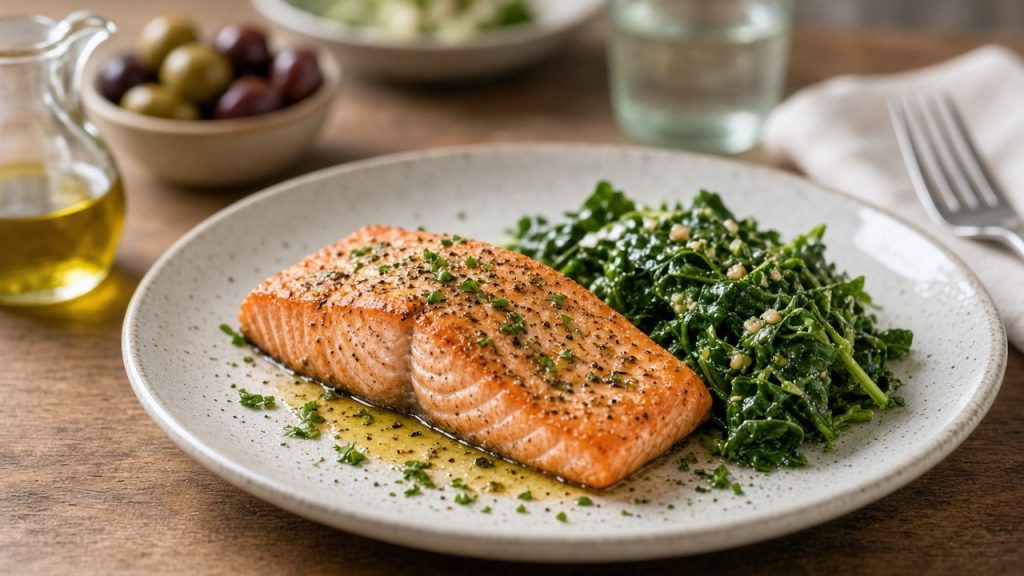
Mediterranean-style eating patterns show up in observational fertility research more often than juice cleanses do. In practice that means vegetables, legumes, fish if you eat it, olive oil, whole grains, and fewer ultra-processed snacks. It is a pattern, not a personality, and nobody needs to overhaul their whole kitchen the week stimulation starts.
Folate deserves its own sentence. Food folate plus the prenatal your clinic recommends covers the window that matters, and UK hospital guidance commonly suggests 400 micrograms of folic acid daily until 12 weeks of pregnancy, with 10 micrograms of vitamin D alongside it. Your clinic may dose differently, so take their number, not a blog’s.
If you have celiac disease, diabetes, or a true allergy, treat those as medical conditions, not as fertility hacks. PCOS dietary advice should come bundled with the rest of metabolic care, and there is a fuller discussion in our PCOS and IVF guide.
Fertility food claims vs. what we actually know
Somewhere between your first injection and beta day, someone will send you a superfood list. Here is a reality check on the usual suspects:
| Claim you will see online | What we actually know |
|---|---|
| Pineapple core after transfer | No clinical trial supports it. Eating pineapple is fine; it is not a medical protocol. |
| Brazil nuts for selenium | A couple a day is harmless for most people, but selenium has not been shown to change IVF outcomes, and megadoses can be toxic. |
| Pomegranate juice for lining | No solid evidence it thickens the endometrium. Follow your estrogen protocol and stay hydrated instead. |
| Gluten-free without celiac disease | Only helps diagnosed celiac disease or true allergy. Cutting gluten without a reason can reduce fiber and B vitamins. |
| Bone broth for egg quality | Nutritious soup, not a fertility drug. No evidence it changes egg quality. |
Caffeine, alcohol, and “just a glass”
Many clinics ask for little or no alcohol during stimulation and the wait. Caffeine advice is usually moderation rather than a total ban, unless your team said otherwise. Ask for your specific limit instead of bargaining with three energy drinks because progesterone wrecked your sleep.
Supplements: bring the bottles, not the influencer list
CoQ10, vitamin D if you are deficient, and omega-3s are commonly discussed. Megadose vitamin A, unlisted “fertility blends,” and extra testosterone boosters are how people get harmed. Some supplements affect clotting or hormone labs, and high-dose biotin can distort thyroid blood draws, so stop it before testing if your clinic asks.
Bring every bottle to your nurse. More labels is not more control, and several common IVF medications interact with supplements patients assume are harmless.
Practical eating during stimulation
Constipation from progesterone, bloating from growing ovaries, and nausea from estrogen make elaborate fertility menus collapse by day five. Keep foods you can actually swallow: yogurt or a tolerated alternative, rice, eggs, fruit, a protein you like. Hospital clear liquids after retrieval follow anesthesia rules, not a wellness blog.
Hydration targets during stim are often around 2 to 3 liters a day unless you are fluid restricted. That supports vascular volume and can ease the headaches that come with rising estrogen. Pair water with sodium from normal meals rather than extreme salt restriction, unless OHSS monitoring says otherwise.
What to ask your clinic at your next appointment
- When should I start or switch my prenatal, and which folate dose do you want for me?
- What is my caffeine limit during stimulation and the two-week wait?
- Which of my current supplements should I stop before retrieval, and when?
- Is my weight in a range you are comfortable with for this cycle, and if not, what is the plan?
- Can you refer me to a dietitian who works with fertility patients?
By phase: stim, retrieval, transfer, and positive test
| Phase | Practical focus | Caution |
|---|---|---|
| Stimulation | Hydration, protein, small meals if bloated | Herbal “fertility teas” with phytoestrogens; disclose them to the clinic |
| Retrieval day | Light breakfast if allowed; avoid heavy grease before anesthesia | Follow fasting (NPO) instructions exactly |
| Post-retrieval / OHSS risk | Electrolyte fluids, protein; monitor weight gain | Call the clinic about rapid gain or severe pain rather than just drinking more water |
| Transfer week | Normal balanced diet; no required superfood protocol | Food-safety habits still apply |
| Positive beta | Prenatal vitamin with folic acid; DHA often discussed | Avoid megadose vitamin A and excess retinol |
After a positive test
Food safety starts to matter in a new way: undercooked meat, unpasteurized dairy, raw fish, and high-mercury fish move onto the avoid list. The NHS hospital guidance linked below has the full list. Nausea from estrogen or early pregnancy is managed with your obstetrician’s list, not with internet remedies. Eating “for two” is outdated; eating enough to not faint is not.
Cost and food do not set gestational age. A known transfer still uses embryo age plus the IVF due date calculator (Day 5 = 261 days from transfer).
Partners and “clean eating” pressure
If one partner polices the other’s plate, that is control, not medicine. Agree on alcohol rules with the clinic, then stop narrating every snack. Shame does not improve blastocyst rates. Sperm quality responds slowly to diet over months, and the male factor guide covers what actually moves the needle for partners.
Pair dietary habits with appropriate movement during IVF rather than compensating for stress with restriction or binge cycles.
Frequently asked questions
Should I cut caffeine completely during IVF?
Many clinics allow moderate intake until pregnancy confirmation. Ask your team for your specific limit rather than guessing.
Is pineapple core after transfer evidence-based?
No robust trial supports it. Harmless in food amounts, but not a medical protocol.
Do I need a gluten-free diet for IVF?
Only with diagnosed celiac disease or a true sensitivity. Most IVF patients need not eliminate gluten.
Do I need to eat organic during IVF?
No guideline requires it. Washing produce well matters more than the organic label.
What if prenatal vitamins make me vomit?
Ask about taking them with food, at night, or switching formulations. Do not simply skip folate for weeks without telling your clinic.
When should I switch to a prenatal vitamin?
Often at positive test or transfer. Folic acid before conception is the key window, so earlier is usually better than later.
Sources
- NHS (Cambridge University Hospitals): healthy living for pregnancy, covering foods to avoid, folic acid, and vitamin D guidance.
- NHS: infertility, including lifestyle factors that affect fertility.
- HFEA: fertility treatments, the UK regulator’s patient guidance on treatment options and decisions.
Your clinic knows your labs, your protocol, and your history. Run any diet change past them before your next appointment.
Educational guide only — not medical advice. If your clinic chart disagrees with a date here, use the clinic chart. For pain, heavy bleeding, or fever, call your clinic’s after-hours line.