
Updated September 2026. By Dr. Farhan. About second trimester after ivf.
The second trimester is when many IVF patients finally exhale, anatomy ultrasound, fetal movement, and clothes that do not fit. It is also when obstetric routines look like everyone else’s: glucose screening, blood pressure, fundal height, and vaccines your country recommends in pregnancy. IVF is a conception story, not a lifelong separate species of pregnancy, unless other risks are present (age, twins, hypertension, diabetes, uterine surgery).
Keep using the IVF due date unless your obstetrician documents a change. Anatomy measurements that are a few days off are common. Do not quietly switch to an LMP app because it shows a rounder number.
Anatomy scan anxiety
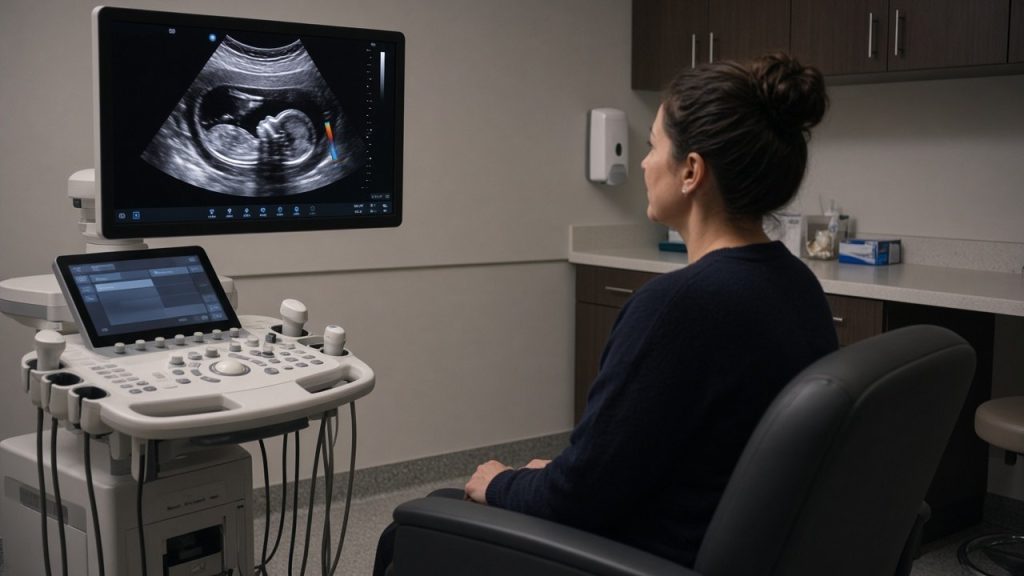
This scan looks at structure, not at whether IVF “caused” a finding. Most scans are reassuring. Soft markers are not diagnoses. If something is flagged, you should leave with a next step (repeat scan, specialist, or genetic counseling), not with a Google hole.

Glucose, thyroid, and blood pressure
Some people are screened earlier for gestational diabetes because of age, PCOS, or ethnicity. Thyroid medication, if you take it, is often adjusted in pregnancy, that is obstetrics, not the IVF clinic’s leftover job, unless they still share care. Home blood pressure cuffs help if you have a history of hypertensive disease; learn the numbers that mean “call today.”
Cost and food do not set gestational age. A known transfer still uses embryo age plus the IVF due date calculator (Day 5 = 261 days from transfer).
Work, travel, and sex
Unless restricted, second-trimester travel and work are individual. Sex is usually allowed in uncomplicated pregnancies. IVF does not create a permanent pelvic rest sentence. If you had a cerclage, bleeding, or placenta previa, follow those specific limits.
Telling the IVF story to new clinicians
Anesthesia, prior OHSS, and remaining frozen embryos are relevant. Your due date source (Day 5 FET on a given date) should be in the chart in one sentence so covering doctors do not “redate” you at 2 a.m.
Childbirth classes and IVF-specific questions
Ask the instructor whether they are comfortable with IVF dating questions so you are not publicly re-explained. Anatomy-scan follow-ups can overlap with class season; missing a class is allowed.
If you have remaining embryos, decide before the third trimester who can be told. Family pressure to “use them immediately” after a healthy singleton is a real problem. You can wait.
Educational notes on second trimester after ivf. Medication, testing, and timing stay with the clinicians who know your protocol.
What changes when the first trimester ends
The second trimester after IVF is often the first stretch where pregnancy feels publicly real, energy may return, nausea can fade, and the fertility clinic has usually stepped back. Medically, this chapter shifts from early viability monitoring to fetal anatomy, growth screening, and maternal metabolic testing. IVF itself rarely changes the standard obstetric schedule, but your history may influence add-ons: extra growth scans after twins after IVF, earlier glucose testing with obesity or PCOS, or repeat cervical length checks if prior surgery or short cervix was noted.
Patients sometimes expect IVF to mandate MFM (maternal, fetal medicine) care for every pregnancy. In practice, referral patterns depend on age, plurality, comorbidities, and prior loss, not the conception method alone. If PGT-A was normal, that does not eliminate anatomy scan findings; structural issues can still occur independently of chromosome count.
Anatomy scan, NIPT follow-up, and glucose screening
The mid-pregnancy anatomy ultrasound (often 18-22 weeks) evaluates organs, placenta location, fluid, and cervical length when indicated. After IVF, dating is usually secure from first-trimester scan, so late booking still fits the window if you transferred care late. NIPT after IVF may have been drawn in the first trimester; second trimester sometimes brings integrated screening or AFP discussion if NIPT was not done, policies vary by country and payer.
| Test or milestone | Typical timing | IVF-specific nuance |
|---|---|---|
| Detailed anatomy ultrasound | 18-22 weeks | Same indications; confirm placenta if prior uterine surgery |
| Glucose challenge (gestational diabetes screen) | 24-28 weeks | PCOS or obesity may prompt earlier testing |
| Fetal movement awareness | ~18-22 weeks first pregnancy | Anterior placenta may delay perceived kicks |
| Progesterone support | Usually stopped earlier | Do not restart fertility progesterone without OB order |
Feeling movement is subjective. IVF patients who tracked every early symptom sometimes interpret quiet days as crisis; kick-count protocols generally start later in pregnancy. Use your OB’s triage line for decreased movement only after the gestational age they specify, often third trimester unless high risk.
Planning ahead without living in the app
Use the second trimester to finalize pediatrician choice, leave planning, and understand where you will deliver if your fertility center was out of state. If embryo storage bills continue while you are pregnant, storage renewal is administrative, unrelated to the current pregnancy but easy to forget. Link forward to third trimester planning and the week-by-week hub for late-pregnancy topics you do not need to solve at 20 weeks.
Emotional whiplash is common: the identity shift from infertility patient to pregnant patient can leave partners unsupported. Second trimester is a reasonable time to re-engage counseling if the first trimester was survival mode only.
IVF label on the anatomy scan requisition
Many maternal, fetal medicine teams note “conceived via IVF” on the anatomy scan order so sonographers allow extra time for placenta location and cervical length when indicated. If your pregnancy followed PGT, the scan still checks anatomy. PGT does not replace structural ultrasound. Bring your IVF due date; some hospitals auto-calculate dates from LMP fields in the EMR and need correction. If you had OHSS history or high-order multiples reduced to singleton, mention it only if relevant to current complications, the second trimester focus is fetal growth and maternal glucose screening, not rehashing stimulation details unless your OB requests them.
Frequently asked questions
Does IVF pregnancy need more ultrasounds in the second trimester?
Only when standard indications apply, multiples, growth restriction risk, placenta previa, or maternal conditions. Uncomplicated singleton IVF pregnancies often follow routine schedules.
If PGT-A was normal, is the anatomy scan optional?
No. PGT-A screens selected chromosomes pre-transfer; anatomy scan assesses structure, growth, and placenta, complementary, not redundant.
Can I travel internationally during the second trimester?
Many OBs allow travel before 28-32 weeks for uncomplicated pregnancies; verify airline policy and bring prenatal records. Blood clot risk counseling applies to any long flights.
When does IVF history stop appearing on intake forms?
Medically it remains relevant for placenta issues and pregnancy complications statistics, but it rarely changes daily second-trimester care once classified low risk.
Sources
Partner roles and workplace planning in the second trimester
Partners sometimes disengage once the fertility clinic steps back, assuming the “hard part” ended with the first heartbeat. Second trimester is when anatomy results, childcare research, and financial planning intensify. Splitting prenatal visit attendance, sharing a written question list for the anatomy scan, and agreeing on who fields family text threads reduces conflict. If one partner still feels like a bystander after IVF, a single counseling session can reset roles before third trimester logistics pile up.
Workplace disclosure timing is personal. IVF history does not oblige telling HR, but twins or high-risk labels may require earlier leave paperwork. Document provider notes for FMLA or equivalent before third trimester if your state or employer offers parental leave tied to medical certification.
Educational guide only — not medical advice. If your clinic chart disagrees with a date here, use the clinic chart. For pain, heavy bleeding, or fever, call your clinic’s after-hours line.