
Dr. Farhan · September 2026. Take this back to the team that has your chart.
Updated September 2026 · Educational, not medical advice. Confirm with your clinic.
Spotting after embryo transfer is one of the most searched symptoms in the two-week wait. A few pink dots on toilet paper can feel like hope; heavier red flow can feel like failure. Both reactions are human, and neither alone tells the whole story without your clinic’s context.
Why spotting happens after transfer
The catheter passes through the cervix, which can cause minor irritation. Progesterone support, especially vaginal forms, can irritate the cervix too. Some patients also see light bleeding when an embryo attaches to the uterine wall, often called implantation spotting.
Implantation typically occurs 1-3 days after a Day 5 blastocyst transfer, but timing varies. Spotting can appear before your first beta hCG, which is why clinics still prefer blood work over home strips. See our guide on home pregnancy tests after IVF for why early urine tests mislead.

Implantation bleeding vs period-like bleeding
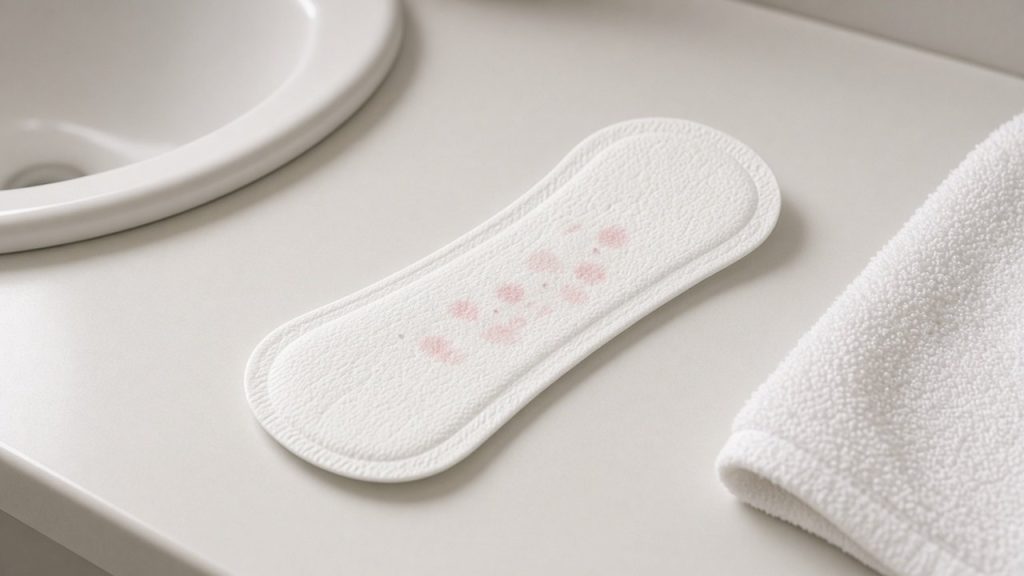
Implantation spotting is usually light pink or brown, lasts hours to a few days, and is not enough to fill a pad. Cramping may be mild. A period-like flow, bright red, clots, or soaking pads, is more concerning, especially with shoulder pain or dizziness.
- Often milder: pink/brown smear, no clots, brief duration
- Call the clinic: red flow increasing, one-sided pelvic pain, fever, foul discharge
- Go to emergency care: severe pain, fainting, heavy bleeding with pregnancy confirmed
Medications that mimic bleeding
Vaginal progesterone can cause friable cervical tissue that bleeds after activity or exam. That does not mean implantation failed. Do not stop progesterone after transfer unless your nurse instructs you, sudden stops can complicate a viable pregnancy.
Activity restrictions: what actually matters
Most clinics advise pelvic rest for a short window, meaning no intercourse, tampons, or swimming per their list. Normal walking and desk work are usually fine. Bed rest has not been proven to improve outcomes and can increase stress. Ask for your written restrictions rather than forum rules.
When beta and ultrasound help
Spotting before beta does not change when blood work is scheduled. If beta is positive but bleeding continues, your team may repeat levels every 48 hours and schedule an early scan to confirm location, including ruling out ectopic pregnancy after IVF, which transfer does not prevent.
Emotional side of the two-week wait
Many patients analyze every spot and cramp. Limit symptom googling to clinic-approved resources. If anxiety spikes, tell your nurse, they hear this daily and can clarify what is normal for your protocol.
Frequently asked questions
Is spotting 5 days after Day 5 transfer normal?
Light spotting around implantation window can occur. Heavy bleeding or severe pain needs same-day clinic contact.
Should I use a pad or tampon?
Pads are usually preferred so staff can gauge amount. Follow your clinic’s pelvic-rest instructions.
Does spotting mean implantation failed?
Not necessarily. Many viable pregnancies include brief spotting; only beta and ultrasound confirm outcome.
Can exercise cause spotting after transfer?
Strenuous activity may irritate the cervix. Ask when you may resume workouts.
When should I call after hours?
Heavy bleeding, severe or one-sided pain, fever, or fainting warrant urgent contact or emergency care.
Calendar: IVF due date calculator. Same Day 3/5/6/7 offsets in Android app.
Pink, brown, and red: what the color might mean
Spotting after embryo transfer terrifies because it looks like a period starting early. Color alone is an imperfect guide, but it helps organize questions for your nurse. Pink or light red spotting on the toilet paper, especially after progesterone suppositories or a vaginal exam, often comes from cervical irritation, the cervix was manipulated during transfer and remains sensitive while luteal support continues. Brown discharge usually indicates older blood leaving the vagina slowly; many patients see brown streaks around days 7-10 without a negative beta. Bright red flow that fills a pad per hour is a different category and should trigger immediate clinic contact or emergency guidance, particularly after a positive pregnancy test.
Implantation bleeding is real but cannot be confirmed at home. If it occurs, it tends to be scant and brief, not a full menstrual flow. Cramping plus light spotting sends many patients to forums; statistically, both happen in successful and unsuccessful cycles. The only reliable next step remains scheduled beta hCG, not color interpretation. For timing context across the wait, pair this page with our day-by-day two-week wait guide.
Spotting triggers that are not pregnancy loss
Before assuming the cycle has failed, consider common non-emergency causes your clinic will ask about:
- Vaginal progesterone or estrogen irritating the cervix or vaginal wall
- Constipation or straining during bowel movements
- Intercourse or pelvic exam if your protocol allowed activity
- Subchorionic hematoma later in pregnancy (less common before first ultrasound)
- Breakthrough bleeding on supplemental estrogen in programmed FET cycles
Progesterone route changes sometimes reduce spotting without changing efficacy, that is a clinic decision, not a DIY switch. See progesterone after IVF transfer for how different forms behave. If you also take low-dose aspirin, bruising and spotting may be slightly more noticeable; report patterns rather than stopping medication independently.
When to call versus when to breathe
| Pattern | Typical clinic advice category |
|---|---|
| Spotting on wiping, no clots, stable over 24 hours | Often monitor; call if on aspirin or history of ectopic |
| Spotting after each suppository insertion | Mention at next check-in; may discuss route change |
| Red bleeding increasing over hours with cramp | Same-day nurse line |
| Heavy bleeding with dizziness after positive beta | Urgent evaluation, confirm with your clinic |
| Shoulder pain plus spotting after positive beta | Emergency pathway, rule out ectopic pregnancy |
Home urine tests during spotting rarely settle the question, trigger shot hCG can linger and produce false hope or false alarms. Follow your clinic’s blood beta schedule outlined in our beta hCG after IVF transfer guide. Spotting does not alter due-date mathematics once pregnancy is confirmed; transfer date and embryo stage still anchor obstetric dating via our IVF due date calculator.
Patients with prior cesarean scars or cervical procedures sometimes bleed more easily after catheter passage, mention surgical history when you call. Document pad use (spotting vs soaking) rather than photographing every wipe; clearer data speeds triage without amplifying anxiety.
Frequently asked questions
Is spotting after embryo transfer a good sign?
It can occur in successful pregnancies and in cycles that fail. Light spotting is common enough that it should not be treated as proof of implantation or loss. Wait for beta hCG unless bleeding meets urgent thresholds, confirm with your clinic.
Can progesterone suppositories cause bleeding after transfer?
Yes. Mechanical irritation and cervical sensitivity frequently produce pink or brown discharge. Report it, but do not stop prescribed support without medical guidance.
Should I wear a pad and stop inserting progesterone if I see blood?
Do not skip doses unless your clinic instructs you to. Many patients continue vaginal progesterone with light spotting. Ask whether to switch to PIO or oral forms if bleeding worsens.
How is spotting different from a chemical pregnancy?
A chemical pregnancy is defined by blood hCG rising then falling before ultrasound visualization, not by spotting alone. See our chemical pregnancy after IVF page for beta patterns; spotting may happen in both chemical and ongoing pregnancies.
Sources
ACOG. Bleeding during pregnancy FAQ · ASRM. Practice guidance · CDC. ART patient resources
Tools: IVF due date calculator · FET calculator · Android app
Confirm every next step with the team that ordered your labs. This article is teaching material only.
Educational guide only — not medical advice. If your clinic chart disagrees with a date here, use the clinic chart. For pain, heavy bleeding, or fever, call your clinic’s after-hours line.