
Dr. Farhan · September 2026. Take this back to the team that has your chart.
Updated September 2026 · Educational, not medical advice. Confirm with your clinic.
PGT-A embryo testing (preimplantation genetic testing for aneuploidy) checks whether an embryo has the expected number of chromosomes before transfer. Clinics often recommend it for age-related risk, repeated implantation failure, or repeated loss, but it is not mandatory for every IVF cycle.
How PGT-A is performed
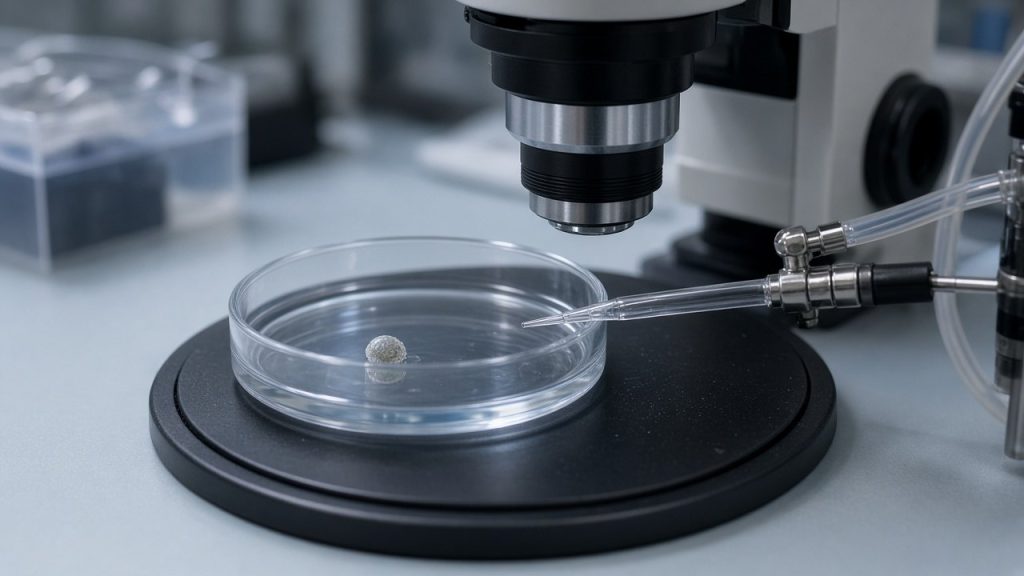
Embryos are grown to blastocyst stage in the lab. A few trophectoderm cells are biopsied from the outer layer that becomes placenta, not from the inner cell mass that becomes the baby. Samples are sent to a genetics lab while embryos are frozen. Results return as euploid (typical chromosome number), aneuploid (abnormal), or mosaic (mixed signals).

What euploid and aneuploid mean
Euploid embryos are prioritized for transfer because they correlate with higher live birth rates per transfer in many studies. Aneuploid embryos are usually discarded or not transferred because they often fail to implant or lead to chemical pregnancy or miscarriage.
Mosaic results fall in a gray zone, some clinics transfer low-level mosaics after genetic counseling; others do not. Ask how your lab defines mosaic categories.
Benefits patients hope for
- Fewer failed transfers and early losses from common chromosome errors
- More confidence selecting one embryo in elective single embryo transfer
- Reduced time to pregnancy when many blastocysts are banked
Limitations testing cannot remove
PGT-A does not guarantee pregnancy. It does not test all genes, structural rearrangements, or implantation issues like thin lining, see endometrial lining thickness for uterine preparation. Biopsy error and lab variability exist, though modern platforms are highly accurate.
Testing adds cost and requires freeze-all cycles, delaying transfer until results return, often 1-2 weeks.
Who should discuss PGT-A
Common discussion points include maternal age over 35-37, multiple untested failed transfers, recurrent pregnancy loss, or family history of chromosome conditions. Young patients with several good-quality blastocysts may skip testing and still succeed, shared decision-making with your RE matters more than online averages.
After a euploid transfer: dating pregnancy
Once pregnant, dating still follows transfer date and embryo age. A Day 5 euploid transfer uses 261 days from transfer to estimated due date. PGT-A does not change that math, use our IVF due date calculator and clinic ultrasound schedule together.
Frequently asked questions
Does PGT-A damage embryos?
Biopsy at blastocyst stage is considered low risk when performed by experienced labs, but discuss lab track record.
How long do PGT-A results take?
Often 7-14 days after biopsy; clinics schedule FET after review.
Is PGT-A the same as PGT-M?
No. PGT-M tests known single-gene conditions; PGT-A screens chromosome number.
Can mosaic embryos become healthy babies?
Some low-level mosaics may, but outcomes depend on mosaic level and clinic policy, require counseling.
Does insurance cover PGT-A?
Coverage varies widely; ask for billing codes and written estimates before biopsy.
Calendar: IVF due date calculator. Same Day 3/5/6/7 offsets in Android app.
This page explains pgt-a embryo testing explained in plain language. It is not a clinic visit. Confirm the plan with your RE or OB.
From blastocyst biopsy to euploid label
PGT-A embryo testing samples a few trophectoderm cells from the outer layer destined to become placenta, not from the inner cell mass that forms the fetus. Embryos are biopsied at blastocyst stage, vitrified, and shipped to a genetics lab while you wait for results classifying each embryo as euploid (typical chromosome number), aneuploid, or mosaic (mixed signals).
Euploid embryos are prioritized for transfer because per-transfer live birth rates are higher in many age groups compared with untested cohorts. Aneuploid embryos are usually not transferred, they often fail to implant or end in chemical pregnancy or early loss. Mosaic categories occupy a gray zone where some clinics transfer low-level mosaics after counseling; others do not.
Benefits, costs, and hard limits
Patients pursue PGT-A hoping to reduce failed transfers, shorten time to live birth when many blastocysts exist, and feel confident choosing single embryo transfer. Costs include biopsy fees, lab charges, and mandatory freeze-all cycles that delay transfer one to three weeks while results return.
| PGT-A can help with | PGT-A cannot fix |
|---|---|
| Common chromosome-number errors linked to age | Thin lining or uterine cavity disease |
| Embryo selection among several blasts | Single-gene disorders (needs PGT-M) |
| Confidence in elective single transfer | Implantation timing issues (ERA territory) |
| Reducing untested miscarriage of aneuploid conceptions | Sperm DNA fragmentation or thrombophilia alone |
PGT-A does not guarantee pregnancy. Biopsy error and lab variability exist though modern platforms are highly accurate. Embryo morphology grades and PGT-A results both inform selection, a beautiful grade does not override an aneuploid call, and a euploid embryo can still fail with an unprepared endometrium.
Who should have the conversation
Common discussion triggers include maternal age roughly 35 and older, repeated untested failed transfers, recurrent pregnancy loss, or family history of chromosome conditions. Young patients with several good blastocysts may skip testing and succeed, shared decision-making beats online averages.
After euploid transfer and positive beta, obstetric dating still uses transfer day and embryo stage. PGT-A does not alter Day 5 math. Pair our IVF due date calculator with clinic ultrasounds. If pregnant, some patients still consider NIPT, screening at different biologic layers, after counseling.
Mosaic reports deserve genetics consult before transfer: percent aneuploidy, chromosome involved, and clinic policy on transfer versus discard shape decisions more than a single label. Some labs rebiopsy or re-run samples; ask about turnaround if results are inconclusive. PGT-A on one embryo does not test siblings in the freezer, each straw has its own result. Document how many euploid embryos remain after testing when planning time between cycles. Young donors or egg donors still produce aneuploid embryos. PGT-A is not only for advanced maternal age. Segmental aneuploidy and complex rearrangements may need specialized genetic review beyond standard PGT-A reporting. No-result PGT-A samples occasionally occur from low DNA amplification, your lab may rebiopsy a re-expanded blastocyst or recommend untested transfer after counseling. Embryo banking for sibling attempts should note which straws were biopsied so future thaw plans stay synchronized with genetics records. Ask whether your lab reports segmental aneuploidy separately from whole-chromosome gains or losses.
Frequently asked questions
Does biopsy harm the embryo?
Blastocyst trophectoderm biopsy is considered low risk when performed by experienced labs. Discuss your clinic’s and lab’s track record and discard policies for non-diagnostic samples.
How long do PGT-A results take?
Often 7-14 days after biopsy, sometimes longer with shipping or reanalysis. FET scheduling begins after the embryology-genetics review meeting.
Is PGT-A the same as PGT-M or PGT-SR?
No. PGT-M tests known monogenic conditions; PGT-SR addresses structural rearrangements. PGT-A screens overall chromosome number.
Will insurance cover PGT-A?
Coverage varies by plan and indication. Request billing codes and written estimates before biopsy day.
Sources
Educational guide only — not medical advice. If your clinic chart disagrees with a date here, use the clinic chart. For pain, heavy bleeding, or fever, call your clinic’s after-hours line.