
September 2026 · Early pregnancy after IVF · Confirm bleeding plans with your clinic.
A subchorionic hematoma, blood collecting between the placenta and uterine wall, shows up on ultrasound more often than many patients expect, especially after IVF. Most are small and resolve. This page explains what the scan report means, when bleeding is urgent, and how SCH fits with transfer-based due dates.
What showed up on my scan?
After a positive beta hCG, the first question is usually whether the pregnancy is in the uterus. The second surprise, at the first ultrasound, can be a dark fluid collection labeled subchorionic hematoma (SCH) or “subchorionic bleed.”
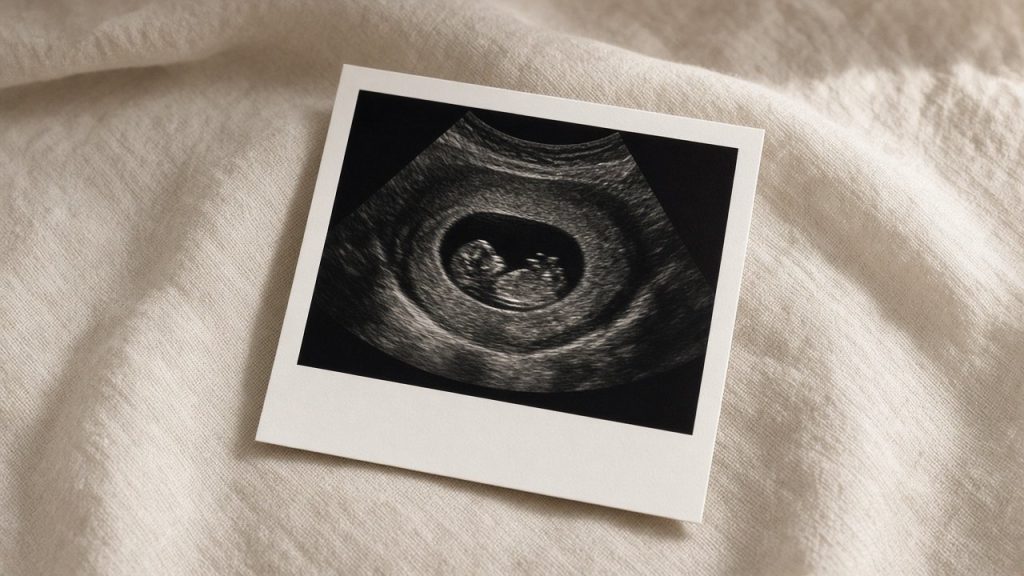
Think of it as a bruise under the developing placenta. Ultrasound sees it as a crescent-shaped pocket next to the gestational sac. It is not the same as a miscarriage, and it does not mean the embryo failed, though the wording on a radiology report can sound alarming when you are already anxious from the two-week wait.
IVF pregnancies are monitored earlier and with more scans than many spontaneous pregnancies, so SCH gets documented more often. That does not necessarily mean IVF causes more hematomas; it may mean we simply look sooner.

Size and location matter more than the label
Clinics usually describe SCH by approximate size relative to the gestational sac, small, moderate, or large, and whether it sits near the cervical os (the opening). A small collection behind the sac, with a normal heartbeat, is the scenario most patients hear about in the office.
Larger bleeds, especially those stretching along the membrane near the cervix, can correlate with more visible spotting or light bleeding. Your team may suggest pelvic rest, avoiding heavy lifting, or holding off on exercise for a week or two. Protocols differ; follow the plan you were given rather than a generic list from a forum.
| What you might hear | Plain-language meaning |
|---|---|
| Small SCH | Often monitored on schedule; many shrink by the next scan |
| Heartbeat seen | Reassuring sign; hematoma alone rarely changes dating |
| Repeat scan in 1-2 weeks | Standard follow-up to see if the collection is resolving |
Does SCH change my due date?
Usually no. Obstetric dating after IVF still anchors to embryo transfer date and embryo stage, not the day SCH appeared or disappeared. If a later scan measures the fetus slightly ahead or behind transfer math, your provider may discuss adjusting the official EDD, that conversation is about fetal size, not the hematoma itself.
Our IVF due date calculator and IVF vs ultrasound dating page explain how those two numbers can differ without implying anything is wrong with the pregnancy.
When bleeding needs a same-day call
Light brown or pink spotting with a known small SCH is common and frightening but not always an emergency. Call the same day, or go to urgent care, if you soak a pad in an hour, pass clots larger than a grape, have sharp one-sided pain, feel faint, or run a fever. Those symptoms can overlap with other issues (including ectopic pregnancy, which IVF does not eliminate), so let clinicians sort cause from symptom list.
Keep your clinic’s after-hours line saved before the weekend. If you are on progesterone support, do not stop or double doses on your own because of spotting unless your nurse explicitly told you to.
What happens on follow-up ultrasound
Many SCHs shrink between six and ten weeks gestation (counted from transfer-based dating). A resolving bleed may look smaller, fragmented, or simply absent. Occasionally it persists into the second trimester; teams then watch placental location and any previa concerns separately.
Research on large SCH and miscarriage risk exists, but individual outcomes depend on size, maternal history, and whether the fetus is growing normally. A single statistic from a study abstract rarely maps cleanly onto your scan photo. Ask your provider how your measurement fits their experience.
Progesterone, aspirin, and other meds, ask before changing anything
Patients on vaginal progesterone or PIO after transfer sometimes wonder whether spotting means support should stop. Unless your clinic gives explicit hold instructions, stopping abruptly can destabilize a protocol they chose for luteal support. The same goes for low-dose aspirin started around transfer for certain histories, do not add or remove it based on a forum post.
If you are also navigating a prior chemical pregnancy or miscarriage, an SCH finding can reopen old grief. That emotional overlap is normal even when the current scan shows a heartbeat. Tell your nurse if anxiety is spiking; some clinics offer earlier repeat scans purely for reassurance.
Practical tips while you wait for the next scan
- Track pad use and color of discharge so you can describe changes accurately on the phone.
- Skip high-impact exercise if you were told to rest; gentle walking is often allowed, ask first.
- Hydrate normally; dehydration does not cause SCH but makes you feel worse on progesterone.
- Bring a support person to repeat-scan appointments; hearing “it’s smaller” is hard to retain when relieved.
- Screenshot the ultrasound report (if your portal allows) so you remember exact wording between visits.
What the evidence says, without drowning in statistics
Observational studies link large subchorionic hematomas with somewhat higher miscarriage rates than pregnancies without bleeds. Small collections near the sac, especially once cardiac activity is seen, sit in a much more reassuring bucket. Meta-analyses cannot tell you whether your pocket will shrink, they describe groups, not individuals.
That gap between population data and personal fear is why a direct conversation with your provider beats late-night searching. Write down two questions before the call: “How big is mine relative to the sac?” and “What symptom should trigger me to come in tonight?”
Questions patients ask in the waiting room
Can I travel with a subchorionic hematoma?
Many people do, after clearance. Long flights plus dehydration and constipation from progesterone are the usual nuisances, not the hematoma label itself. Get written guidance if you are crossing borders while pregnant.
Did lifting something cause it?
Most SCHs are not blamed on a single event. Patients often search for a cause because blame feels manageable. Clinicians generally treat them as findings to monitor, not punishments for one heavy grocery bag.
Will NIPT or anatomy scan be different?
NIPT timing follows obstetric schedule, not SCH status. Anatomy scan at 18-22 weeks still checks fetal structures; a resolved bleed rarely changes what the sonographer measures.
Should I tell my employer yet?
There is no medical deadline. Many people wait until after the first trimester or until symptoms affect work. If pelvic rest limits your job duties, a generic note about “pregnancy monitoring” may suffice without detailing IVF or SCH, that is a personal HR conversation, not something this page can advise on legally.
Related tools: IVF due date calculator · FET calculator
Educational only, not medical advice. Bleeding in pregnancy always deserves a clinician’s input.
Educational guide only — not medical advice. If your clinic chart disagrees with a date here, use the clinic chart. For pain, heavy bleeding, or fever, call your clinic’s after-hours line.